Record Participation for the 2025/2026 Environmental Engineering and Science Foundation Scholarships - Recipients Announced
The application cycle for the 2025–2026 Environmental Engineering and Science Foundation (EESF) Scholarships received a record-breaking 56 completed applications.
Each year, the EESF Scholarships attract a growing number of high-quality applicants for this academic-based scholarship, underscoring the program’s increasing impact and prestige within the environmental engineering and science community.
Emerging from a highly-competitive process that considered academic achievement, resume, essay, and letters of recommendation, the following individuals are the recipients of $2,500 scholarships to continue their path of becoming tomorrow's environmental engineers and scientists. Congratulations to:
It is our privilege to introduce these outstanding recipients.

MASTER'S DEGREE IN ENVIRONMENTAL ENGINEERING
Erin Boyer
Clemson University
My professional goals to protect the environment and public health begin with the desire to contribute to ongoing research in the process of anaerobic digestion within wastewater treatment. In high school, I was uncertain about what I wanted to study in college. I was good at math but didn’t feel strongly about chemistry or biology. However, once I decided to go into general engineering at Clemson, I longed for a well-rounded education within engineering which included many different science courses. This led me to major in environmental engineering.
MASTER'S DEGREE IN ENVIRONMENTAL ENGINEERING
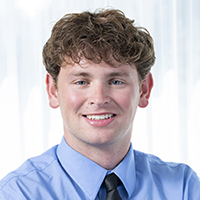
Zachary Krause
Arizona State University
I hope to contribute to projects that integrate green infrastructure, restore natural systems, and make cities more livable — especially for those who have historically been overlooked. I want to work with multidisciplinary teams to ensure that environmental protections and public health considerations are embedded in every stage of the design process, not added as afterthoughts…Ultimately, my goal is to help build a future where healthy environments and healthy people are not mutually exclusive. With every project I contribute to, I hope to uphold the principle that good engineering doesn’t just solve problems — it prevents them.
MASTER'S DEGREE IN ENVIRONMENTAL ENGINEERING
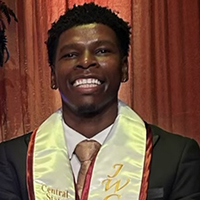
Thando Mawasha
University of Illinois, Urbana-Champaign
During my undergraduate studies, I developed a strong passion for environmental engineering by overcoming complex technical concepts, embracing the application of mathematics, and engaging in real-world design projects. These academic experiences and a personal connection to environmental challenges have shaped my aspiration to become an accomplished engineer who develops solutions to reduce greenhouse gas emissions and creates projects that have a meaningful, positive impact on society…When the time came to choose a major in college, I decided to pursue environmental engineering, to become a water engineer focused on providing access to safe, clean drinking water for all communities, regardless of geography or socioeconomic status.
MASTER'S DEGREE IN ENVIRONMENTAL ENGINEERING
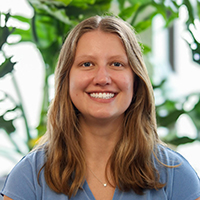
Kerry Prinsen
University of Buffalo, The State University of New York
I have always been extremely passionate about the environment and its protection. This passion led me to pursue a career in environmental engineering, where I am able to create solutions that address problems such as climate change, water treatment and sustainability. Although I have just begun my career by interning at an engineering consulting firm, I have a strong vision of what my future will look like. It is my goal to become a certified Professional Engineer in the environmental engineering field so that I can design equitable and sustainable solutions to modern day problems that the planet and society are facing.

MASTER'S DEGREE IN ENVIRONMENTAL ENGINEERING
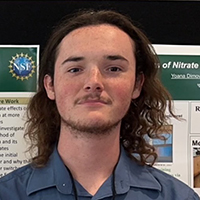
Mar Balvaneda Rodriguez-Armijo
San Diego State University
The Sage Project (a collaborative community effort focused on understanding critical atmospheric contaminants) - introduced to me through my air pollution course - sparked my interest in air quality and its critical impact on both environmental and public health. I aspire to work for the EPA or in environmental consulting, with a focus on air quality monitoring and improvement. Ultimately, I want to give back to communities by developing innovative, sustainable solutions to environmental problems. That is why I chose to pursue an MS in Environmental Engineering at SDSU - to deepen my expertise and bring these goals to life.
MASTER'S DEGREE IN ENVIRONMENTAL ENGINEERING
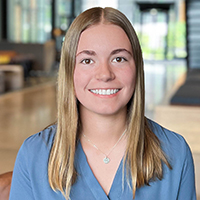
Chase Royall
University of South Florida
My professional goals are a major part of what has pushed me to pursue higher education. It was through my research experience as an undergraduate, particularly my experience as an NSF Research Experience for Undergraduates (REU) researcher and participation in other research at USF that I first discovered the power of cutting-edge technology and the academic community surrounding it. This experience shaped my professional ambition to either pursue an academic position as an educator or work in industry or government as an applied researcher. Both paths would allow me to help bridge the gap between research and the implementation of innovative technologies either by educating and empowering the future generations of engineers to apply these new technologies or helping to directly implement these transformative practices.
MASTER'S DEGREE IN ENVIRONMENTAL ENGINEERING
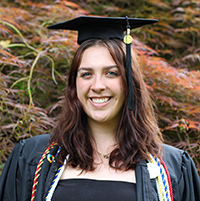
Kiersten Wilson
Colorado School of Mines
I envision a future where site remediation engineers play a pivotal role in global water security, transforming contaminated environments into safe, thriving ecosystems. By driving sustainable remediation solutions and leading collaboration efforts with dedication and resilience, I hope to accelerate the adoption of innovative technologies and best practices. This collective effort can ensure clean water access for all and help mitigate the long-term impacts of contamination. Every body of water, from the shores of Lake Superior to local community reservoirs, is worth protecting.
MASTER'S DEGREE IN ENVIRONMENTAL SCIENCE
Abigail Morgan Fizer
Harvard University
I will examine the profitability of enhanced geothermal energy technologies on a large scale and develop a patentable software in partnership with Project Innerspace that evaluates brownfield sites around the country for geothermal energy potential using research-based Key Performance Indicators such as mine type, distance to transmission lines, severity of contamination, impacted communities, building costs, estimated profits, land costs, MW potential, and more. This work will aid in the remediation of the estimated 500,000 abandoned mines in the United States that have directly killed hundreds of Americans and poisoned millions. This program will advance my biostatistic and geomorphological research knowledge, allowing me to transform and prevent environmental public health catastrophes caused by the coal, oil, and natural gas industries that have destroyed my home and my community’s health.
MASTER'S DEGREE IN ENVIRONMENTAL SCIENCE
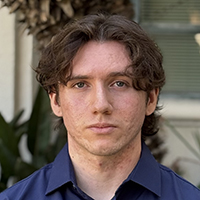
Fabian Gomez
University of California, Santa Barbara
I am committed to tackling environmental contamination that quietly harms workers, families, and communities. I graduated from California State University, Long Beach, where I studied Environmental Science and Policy with minors in Biology and Economics. Each project I worked on sharpened my focus: leading groundwater testing at River Ridge Ranch, where arsenic and nitrate contamination hid in seemingly clean streams; conducting microplastics detection at the Moore Institute for Plastic Pollution Research, where I saw how tiny pollutants carry long-term health risks; and building an open-source API to enable researchers to share water quality data faster.
MASTER'S DEGREE IN ENVIRONMENTAL SCIENCE
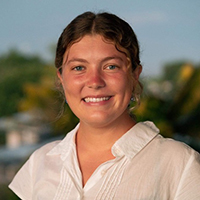
Catherine Waggoner
University of Plymouth
Conservation is not simply an environmental issue—it is a multilateral challenge that impacts food security, education, and economic stability. My career goal is to create a research-baked dialogue between local stakeholders and policymakers that incentivizes collaboration and long-lasting change. The mission of EESF aligns perfectly with my commitment to environmental sustainability through education, outreach and research. As a scholar, I will contribute to the Foundation’s mission by integrating environmental science and engineering solutions to marine conservation, combining technological innovation with socially equable solutions.